








Day nine. The nicotine is gone. The worst cravings are behind you. Then you sit down with your morning coffee and your hand goes to your pocket.
Nothing there.
You're not weak. You're running a routine you've practised more than almost anything else in your life. Ten cigarettes a day is about 100 trips from hand to mouth. Do that for five years and your hand has made that trip roughly 180,000 times.
That doesn't disappear in nine days. Here's why, and what actually helps.
Short answer
The hand-to-mouth habit is the learned routine of reaching for a cigarette or vape, separate from nicotine itself. It lingers because it's tied to everyday cues like coffee, breaks and driving. What helps: know your cue moments, give each one a replacement that fits the same moment, and expect it to take weeks, not days.
Here's the problem: everyone treats it as a nicotine problem
Patches. Gum. Willpower. All aimed at the chemical. Then people stop the nicotine and can't understand why they still want to vape.
Because a vape does two jobs. It delivers nicotine, and it runs a ritual: the reach, the draw, the taste, the pause. Researchers at Queen Mary University of London call those sensory and motor cues secondary reinforcers. Years of pairing with nicotine made them rewarding on their own.1
So you can win the nicotine fight and still lose to the coffee.
What the research found when people replaced the gesture
Read that last line twice. The gesture matters. It isn't magic. None of these studies tested Lio, and Lio isn't a cessation aid. What they show is that the hand-to-mouth part deserves its own plan.
The 3-day map: find your moments
For three days, don't change anything. Just notice every time your hand goes looking. Write down the moment, not the craving.
Most people find the same five to eight moments, every single day:
| Moment | What it really gave you | Try instead |
|---|---|---|
| First coffee | A pause before the day | Same chair, same time, something new in your hand |
| Work break | Permission to step out | Keep the break. Go outside anyway |
| Driving | Something for the hands | A cold drink with a straw, a podcast |
| After meals | A full stop | Brush your teeth, a mint, a tea |
| Stress | A long breath out | Four slow breaths, out longer than in |
| Nights out | Belonging | Decide your answer to “want one?” before you go |
Every nicotine-free option, compared
There's no single best replacement. The right one depends on what you miss most.
How we compared: does it keep the hand-to-mouth action, give flavour, recreate a draw, and does it contain nicotine, vapour or a battery? Lio is ours; it's marked, and every row uses the same criteria.
| Option | Hand-to-mouth | Flavour | Draw | Nicotine | Vapour or battery |
|---|---|---|---|---|---|
| Sugar-free gum or mints | Partly | Yes | No | None | Neither |
| Toothpick, straw or pen | Yes | No | No | None | Neither |
| Fidget object | Hands only | No | No | None | Neither |
| Breathing tool | Yes | No | Slow exhale | None | Neither |
| Flavoured air device (Lio) | Yes | Yes, light | Yes, air only | None | Neither |
| Nicotine-free e-cigarette | Yes | Yes | Yes, vapour | Label says none | Both |
| Nicotine inhalator (licensed) | Yes | Mild | Yes | Yes | Neither |
A licensed nicotine inhalator is a medicine; ask a pharmacist. “Nicotine-free” e-liquids have sometimes been found to contain nicotine. See what lab tests found.
What do you miss most?
Pick one. We'll tell you honestly whether Lio fits.
Lio fits this well. It keeps the break and the hand-to-mouth action, with flavour and no nicotine, vapour or battery.
See the StarterpackLio may fit. The flavour is light, more herbal tea than sweet vape. Mint flavours give a fresh feel in the throat. Start with a mint.
See the flavoursLio isn't the answer for this. It has no nicotine, so it won't ease withdrawal. A pharmacist or GP can advise on licensed nicotine replacement. Lio can help with the ritual later, if you want.
See all the optionsHonestly, Lio isn't for you. Nothing comes out of a Lio. If clouds are what you miss, you'll likely be disappointed.
See all four kinds of air vapeWhere Lio fits
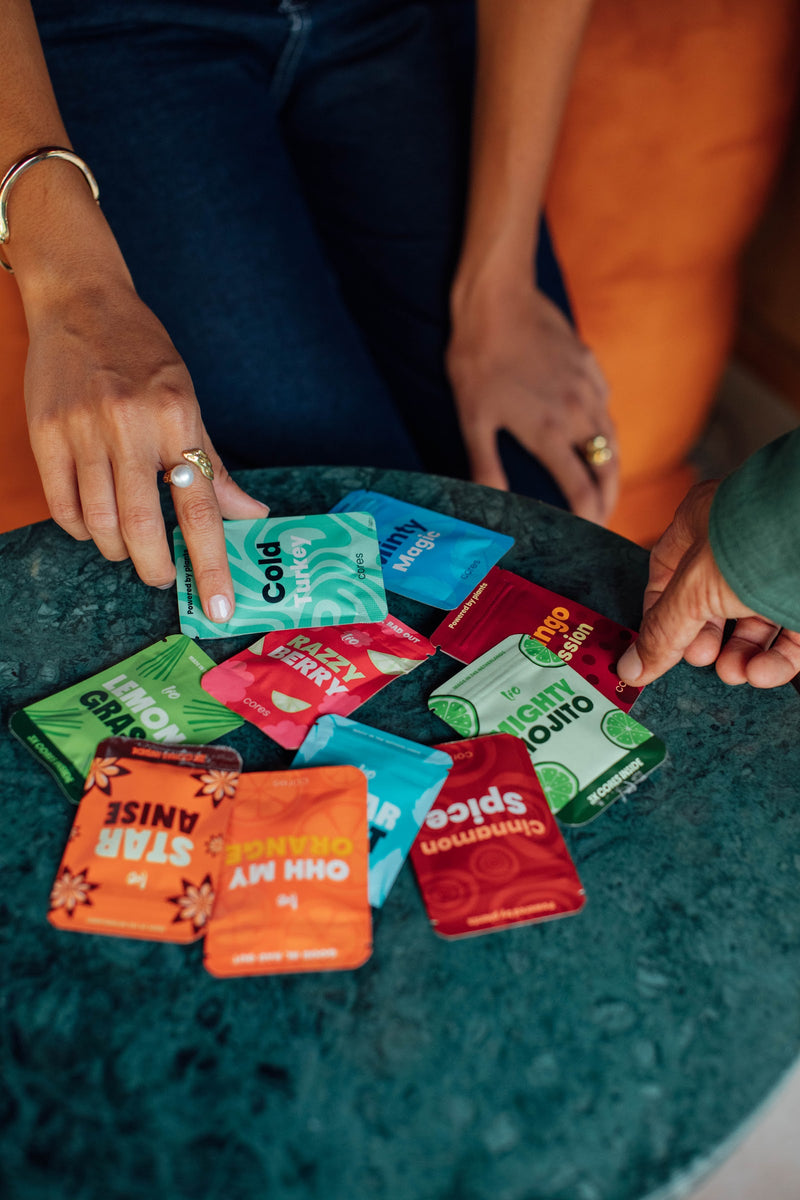
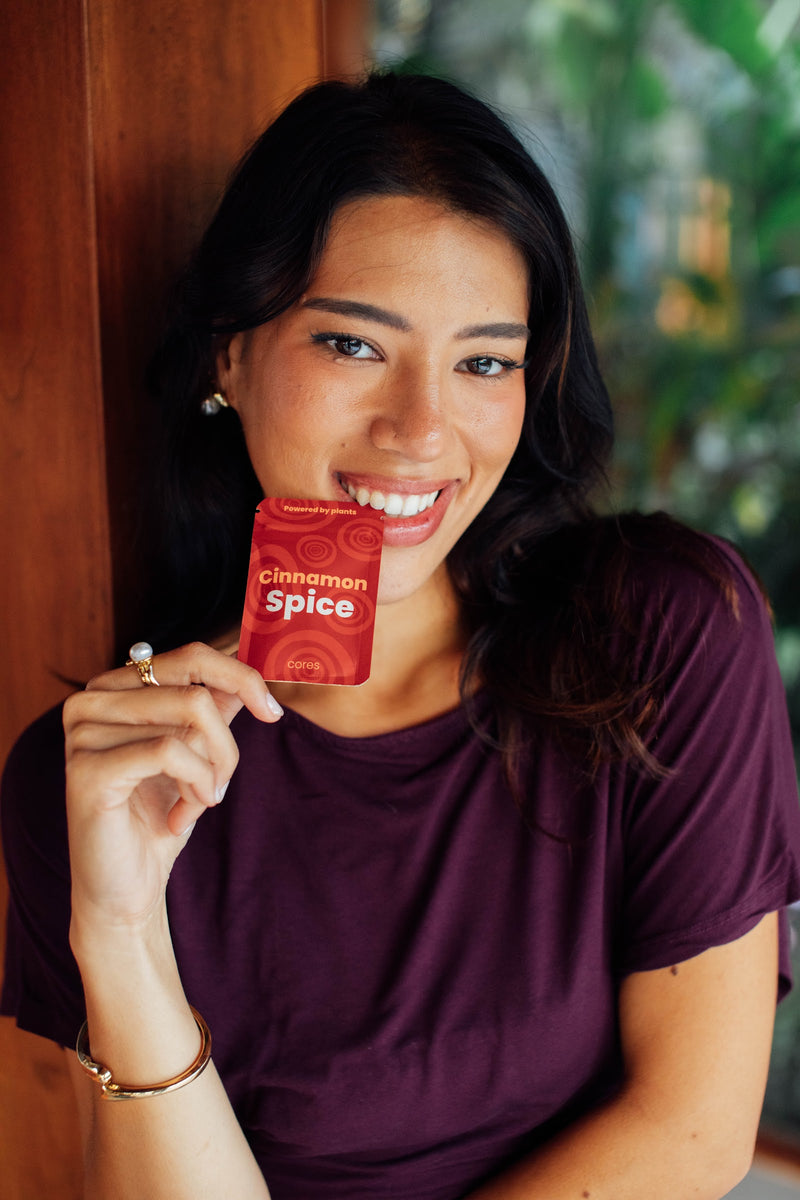
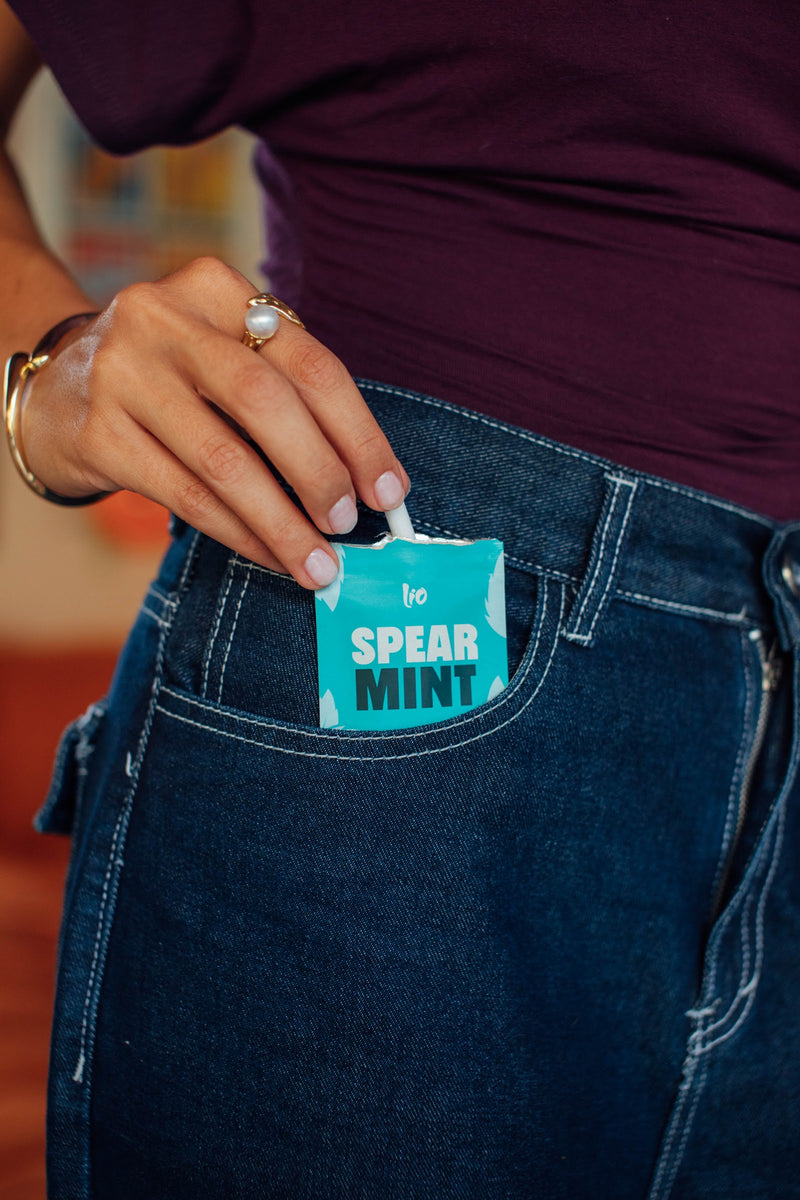
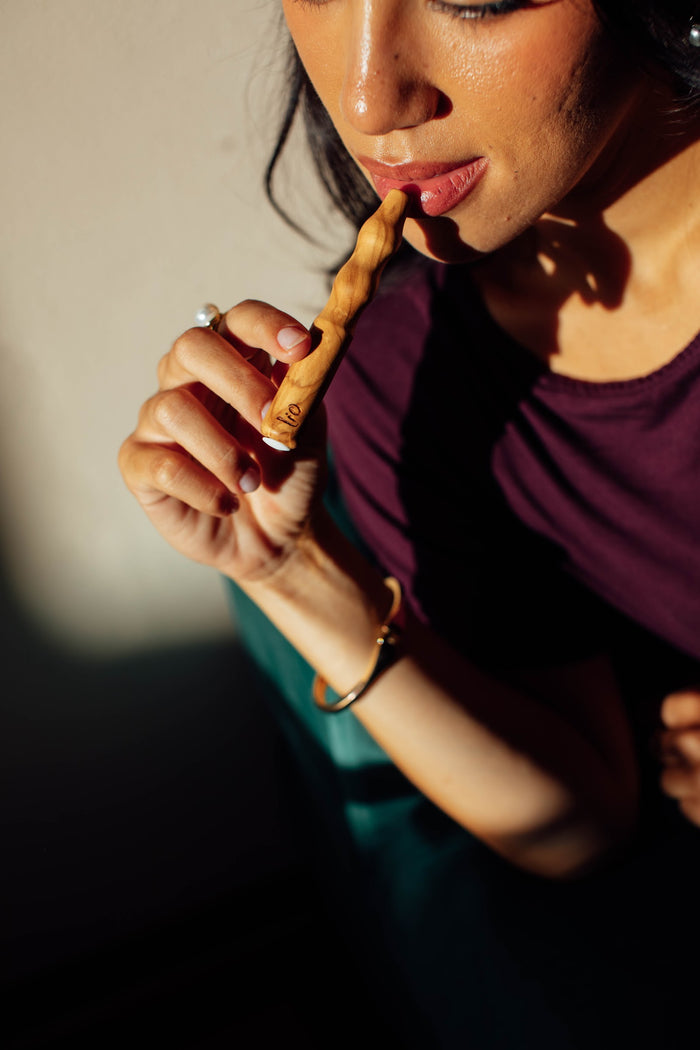
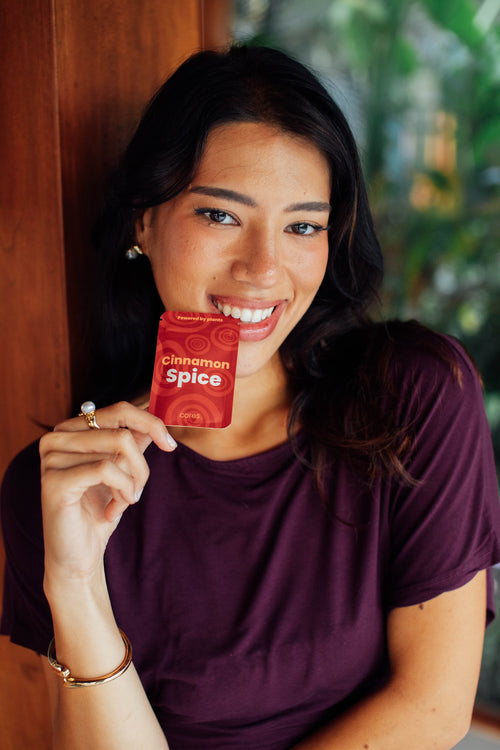
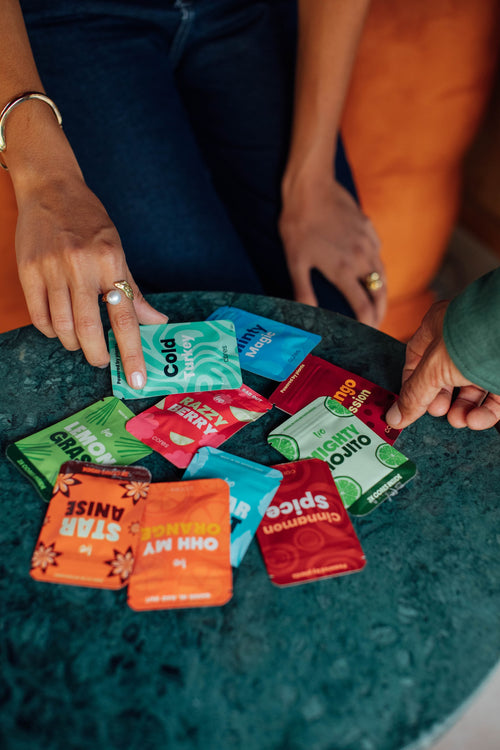
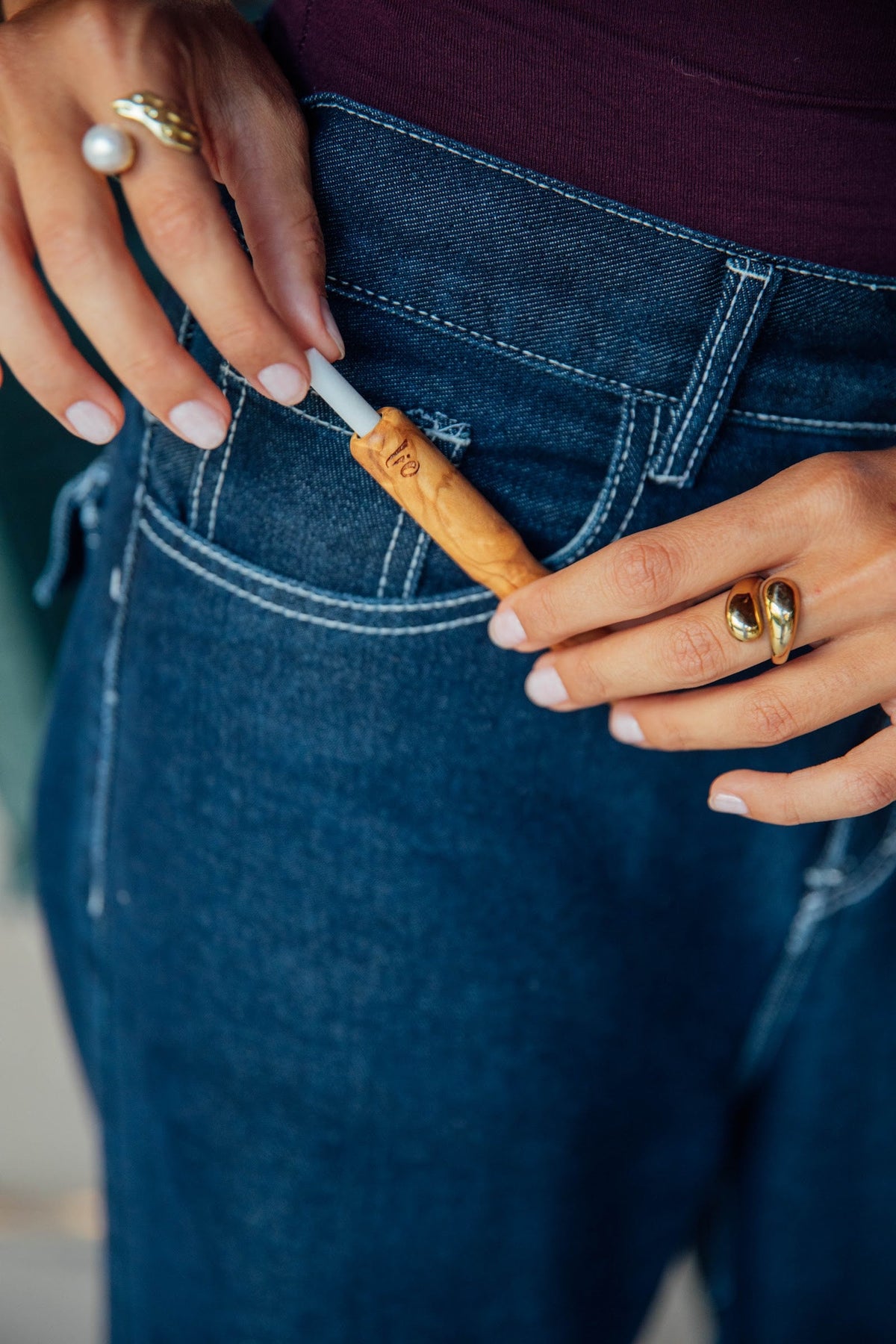
Lio was built for exactly this moment: the coffee, the break, the traffic light. A wooden flavoured air device. Click in a flavour core, take a slow draw, taste cool mint or warm spice, breathe out. Nothing comes out. No nicotine, no battery, no vapour.
It doesn't replace nicotine and it doesn't pretend to. It gives your hand somewhere to go.
…until I realised it was the ritual I was missing.
Who Lio is not for
- If you want nicotine. Lio has none, so it won't ease nicotine withdrawal.
- If you want clouds or a vape-strength hit. It's air with flavour. Some people find it too subtle.
- If you're under 18. Lio is for adults only.
- If you're sensitive to essential oils. Check the ingredients first, and stop if anything feels wrong.
Your first 14 days
- Days 1 to 3: map. Use the table above. Change nothing yet.
- Day 4: swap. Pick a replacement for your three biggest moments. Put it exactly where the vape lived: same pocket, same cup holder, same corner of the desk.
- Days 5 to 14: repeat. Keep the moments, change the object. The reach will still happen. That's not failure. That's the old routine fading.
- If you slip: note the moment. That moment needs a better plan, not more willpower.
And be patient with yourself. In one well-known study, new habits took a median of 66 days to feel automatic, and some took far longer.4 Two weeks is the start, not the finish line.
Remember this
- Research treats the hand-to-mouth action, the draw and the taste as rewards of their own, learned alongside nicotine.1
- In two Italian trials, a nicotine-free inhaler helped mainly when behavioural dependence was high.2,3
- A review concluded these replacements may add to nicotine replacement therapy but are unlikely to work alone.1
- New habits took a median of 66 days to feel automatic in one well known study.4
Frequently asked questions
How long does the hand-to-mouth habit last after quitting?
It varies a lot. Many people notice the reach for weeks or months, mostly in specific moments. Research on habit formation suggests an automatic behaviour often takes two months or more to change.
Is oral fixation real?
The habit is real; the Freudian theory behind the name isn't accepted today. Smoking research calls it the sensorimotor or behavioural part of dependence.
Does a flavoured air device help you quit?
There is no evidence that flavoured air devices, including Lio, help people quit. Lio is not a cessation aid. Some people use it to keep the ritual while they change other parts of the habit.
Sources
- Przulj D, McRobbie H, Hajek P. The effect of sensorimotor replacement on smoking cessation and craving. The Open Addiction Journal. 2012;5:41 to 50. benthamopen.com
- Caponnetto P, Cibella F, Mancuso S, et al. Effect of a nicotine-free inhalator as part of a smoking cessation programme. European Respiratory Journal. 2011. doi.org
- Maglia M, Caponnetto P, Polosa R, et al. Impact of a soft tip nicotine-free harmless cigarette as part of a smoking cessation program. Health Psychology Research. 2021;9(1). pmc.ncbi.nlm.nih.gov
- Lally P, van Jaarsveld CHM, Potts HWW, Wardle J. How are habits formed: modelling habit formation in the real world. European Journal of Social Psychology. 2010;40(6):998 to 1009. doi.org

Founder of Lio. Writes about habits and the products Lio makes. Has a commercial interest in this topic, which is why every claim here is sourced.
Lio is not a medical device, a smoking cessation aid or a treatment, and makes no health claims. This guide is general information, not medical advice. If you want help with nicotine dependence, speak to a pharmacist, GP or your national quit service.